The trajectory that began millions of years ago with our primitive forefathers learning the controlled use of fire brings us to a significant juncture where the world gears up to be powered by the energy of the universe.
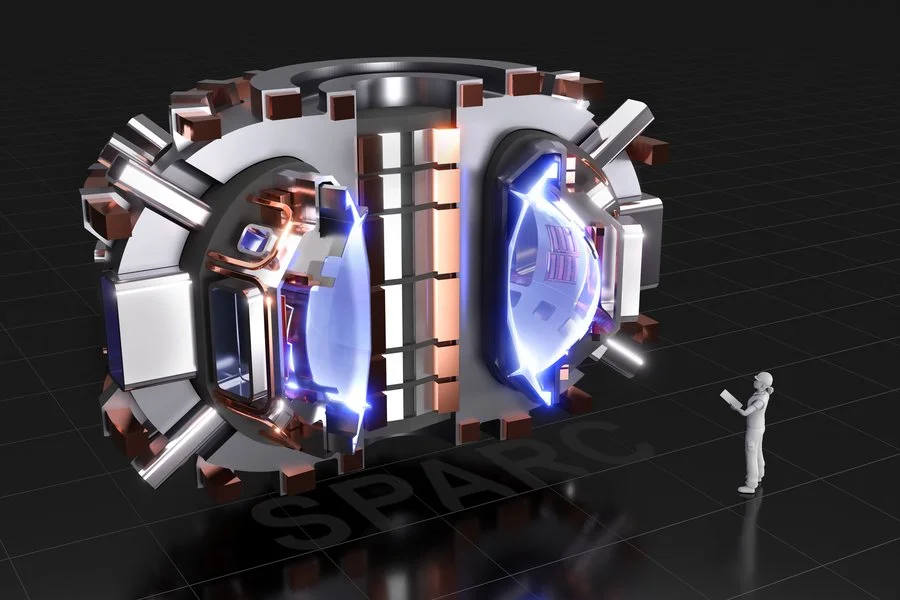
Commonwealth Fusion System (CFS)—a Cambridge-based fusion power company founded in 2018—and the Massachusetts Institute of Technology (MIT) have joined their might to develop the world’s smartest and most compact tokamak called SPARC to produce affordable, reliable, clean, and easily-deployable energy through nuclear fusion.
Why fusion
Fusion, hailed as the holy grail of clean energy, is the ultimate carbon-free and inexhaustible energy source to power the planet in the healthiest way possible. An incredible fact is that it is possible to generate enough energy that a person consumes in their lifetime using a glass of water.
Around 2040, the world will max out with renewables and no further decarbonization will be possible, opined Maria Zuber, Vice President for research, MIT.
Hence, it’s time to debunk the joke bandying around in the global community of scientists and researchers for quite a while that the invention of fusion energy is always 40 years away and pace ahead to the reality where we create and use the same energy that powers the sun and every other star in the universe.
SPARC, with its revolutionary design and technology, is expected to produce as much energy as generated by a tokamak 40 times larger using low-temperature superconducting magnets. Its development will prospectively change the course of tokamak technology and plasma physics, driving the global fraternity of nuclear scientists and researchers further closer to the commercial production of fusion energy.
A brief look at the reaction
In a fusion reaction, Hydrogen isotopes deuterium and tritium fuse together due to extreme pressure and temperature to form plasma or a soup of electrons and protons. In this process, the atoms lose some mass which converts into tremendous amounts of energy—fusion power. This reaction is encased in an invisible bottle formed of magnetic fields, because no material on earth can endure the temperature—100,000,000 degrees or beyond—required in this reaction.
SPARC uses 18 donut-shaped HTS or high-temperature superconducting magnets, arranged in a toroid configuration, each of which comprises 16 sub-magnets with a coil of superconducting tapes around the center.
For a demonstrative experiment conducted in September 2021, the test magnet was encased in a test stand simulating the conditions inside SPARC. As the temperature inside dropped to 20 kelvin, the HTS wires lost electrical resistance and conducted large amounts of electric currents leading to the generation of strong magnetic fields, which, in this case, was 20 tesla—the strongest magnetic field ever created.
The successful trial of the magnet was a seminal milestone because the viability of the SPARC technology greatly hinges on that.
With that frontier conquered, the construction of the SPARC facility is currently underway while the research team gears up to commercialize fusion power by 2025.
Spotlight on SPARC
The motivation behind SPARC has been the production of net positive energy or fusion gain—the ratio of the plasma-generated fusion power to the externally-introduced heat to sustain the plasma temperature—greater than 2.
Interestingly, empirical predictions and physics-based simulations expect SPARC to generate 10 times the energy it consumes to heat up the plasma—Q ≈ 10—which goes way beyond the initial goal of the device—Q>2. It intensifies the confidence in this device as a game-changing smaller-sized, high-field fusion power generator.
One of the notable features of SPARC is its revolutionary design. Despite the size being scaled down linearly, its strength and effectiveness increases because of the game-changing HTS magnet technology, while everything else—like plasma science and tokamak engineering—remains the same.
SPARC will have an invisible vessel formed of strong magnetic fields at its core to confine burning plasmas or a concoction of charged particles—electrons and ions—which will be heated up by electromagnetic waves. The detention of particles and energy in this device is determined by plasma instabilities, while the heating warrants effective propagation and infusion of electromagnetic waves in the plasma. These conditions were simulated by complex computer programs during the demonstrative experiment with the HTS magnet, which comprehensively presented the SPARC mechanism.
The production of the test magnet involved years of persistent effort and teamwork, which didn’t allow even the COVID crisis to take its toll on the continuity.
The research team began their journey with a physical model and a design developed using CAD, conducted a series of experiments, and built multiple prototypes, which finally led to the successful creation and presentation of the HTS magnet. Hundreds of kilometers of high-temperature superconducting wires have been used in this project, with materials supplied by vendors across the globe.
SPARC will prospectively open up whole new vistas for generating fusion energy—the energy of the universe. The successful materialization of a fusion power plant will be the ultimate reward for the generations of nuclear scientists worldwide who sought to address the increasing concern over using carbon-emitting energy sources worsening the climate crisis. It will begin a new epoch, ushering in the hope for a greener and healthier planet.